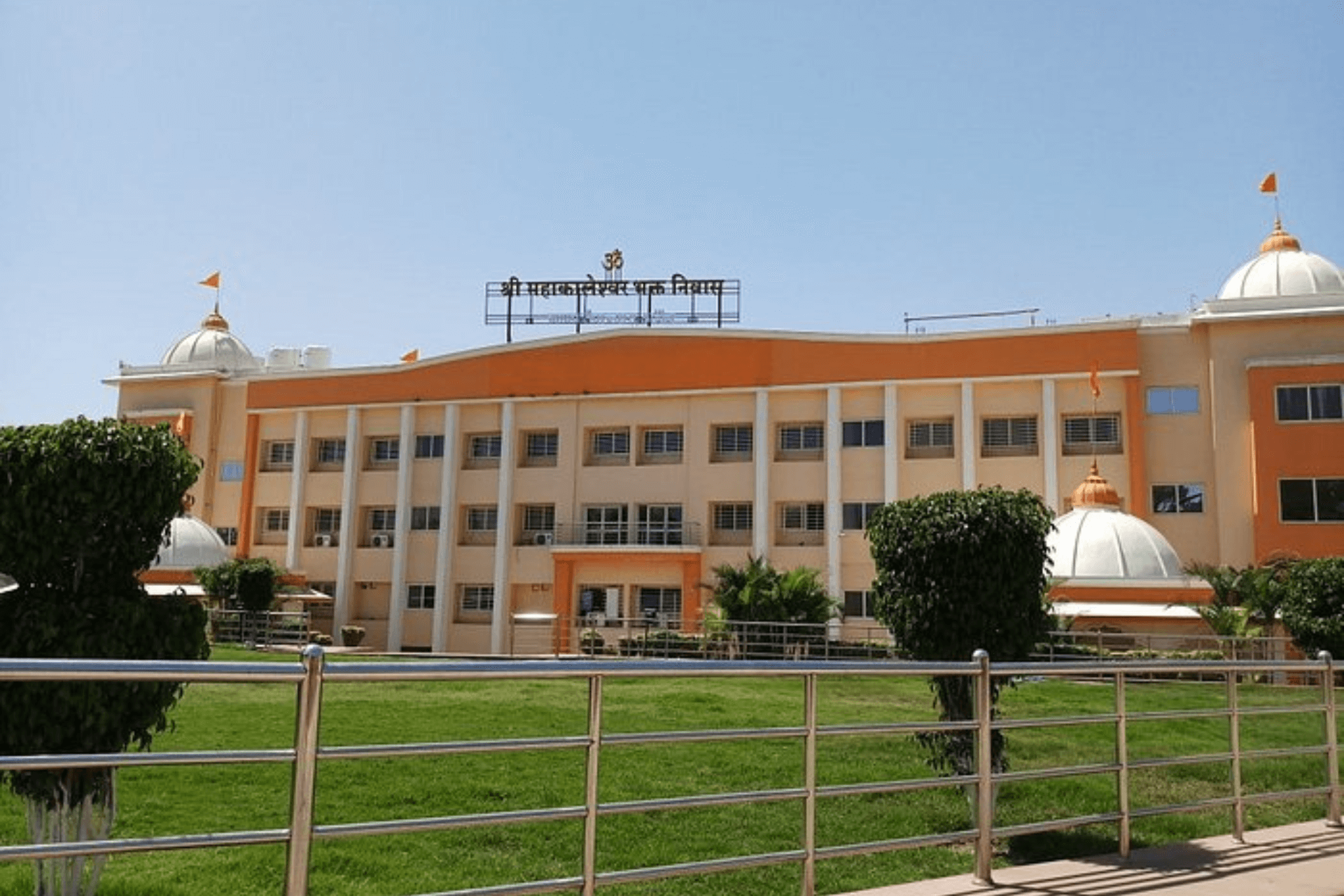
Accommodation
The Mahakaleshwar Temple of Ujjain, one of the twelve sacred Jyotirlingas of Lord Shiva, stands majestically on the banks of the holy river Shipra in the ancient city of Avantika, now known as Ujjain. The term Mahakal signifies “the Lord of Time and Death,” representing Shiva’s power to control cosmic cycles of creation and destruction. According to Hindu scriptures and legends, the temple’s origin dates back to mythological times when King Chandrasena of Ujjain, a great devotee of Lord Shiva, was protected by the Lord himself from the demon Dushana, who had attacked the city. It is believed that Shiva manifested as Mahakaleshwar to safeguard his devotees, and the Lingam here is considered Swayambhu (self-manifested), emerging naturally from the earth. Unlike most other Jyotirlingas, the Mahakal Lingam faces south, symbolizing his aspect as the Lord of Death (Dakshinamurti).Over centuries, the Mahakaleshwar Temple has witnessed several reconstructions. Early historical records mention that King Kumarasena built the original structure, which was later renovated during the Paramara dynasty and again in the 18th century by Ranoji Scindia under the Maratha rule. Despite invasions and destruction, the temple’s spiritual aura and architectural grandeur have always been revived by devotees and rulers alike. The temple complex, adorned with intricate carvings, multiple shrines, and towering spires, draws millions of pilgrims each year. The most sacred ritual here is the Bhasma Aarti, performed daily before sunrise, where Lord Shiva is offered sacred ash — a ceremony that symbolizes life’s impermanence and the eternal power of time. Ujjain itself, one of the seven Moksha Puris (cities of liberation), has been a hub of spirituality, astronomy, and scholarship since ancient times, with the Mahakaleshwar Temple at its heart representing divine power, time, and ultimate liberation.